Spec-Driven Development
Starts Here

Your product, granted.
Define what your product should do. AI builds it. A living product model keeps everything aligned.
Currently in private development · Early access by waitlist · SOC 2 in progress
AI writes code faster than
teams can govern it.
Speed without structure creates risk. The data is in.
The bottleneck is no longer writing code. It is ensuring the code does what the product is supposed to do.
See How AppGenie Solves This →AppGenie doesn't replace coding agents. It's the layer they're missing.
The Bottleneck Shifted.
Your Tools Didn't.
Writing code is no longer the constraint. Knowing what to build — and proving it was built correctly — is. AppGenie owns both ends.
One continuous pipeline from product intent to validated, working software. Every feature you build adds to the safety net.
Define what your product should do.
Structured scenarios with acceptance criteria — not paragraphs in a Google Doc. Your specs become the source of truth for tests, agents, and governance.
Explore Product Requirements →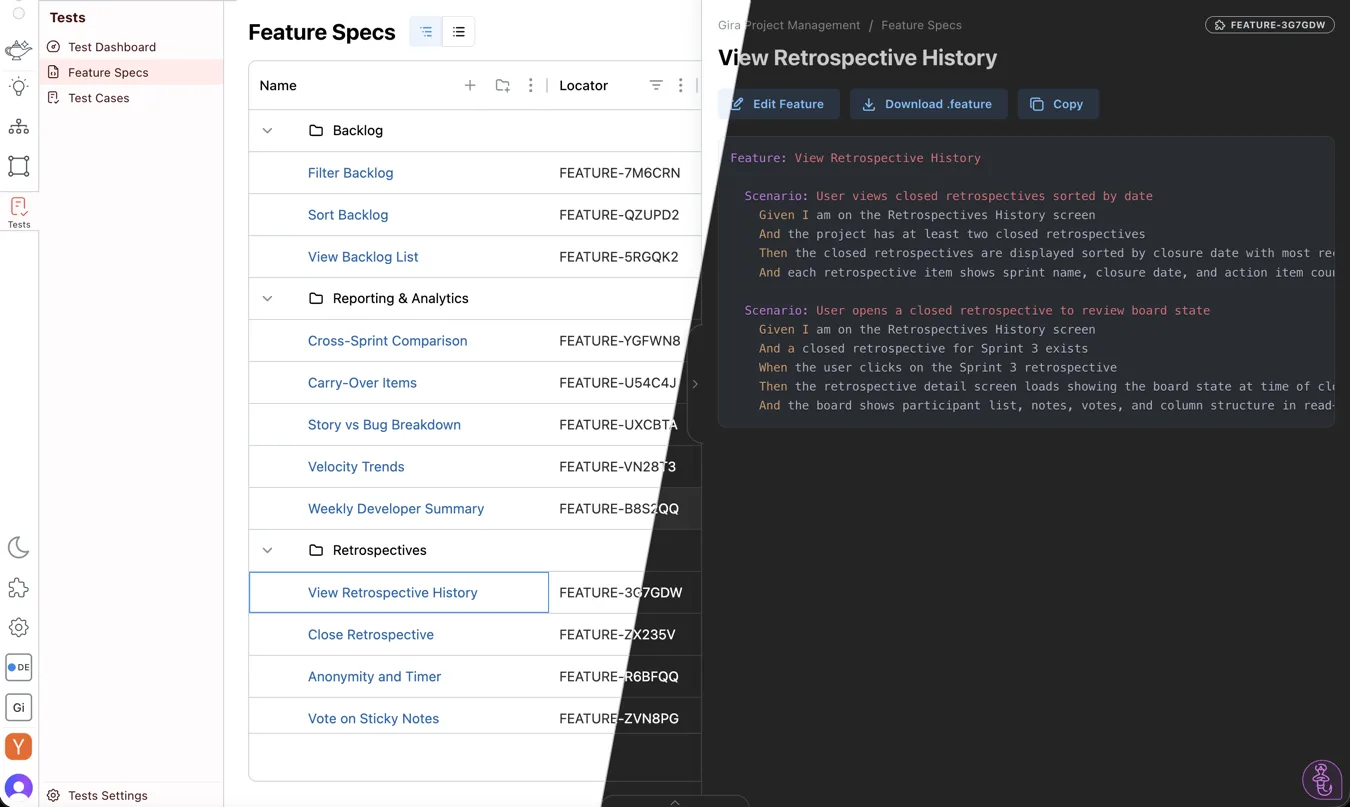
Change One Thing.
Everything Updates.
When a feature changes, AppGenie regenerates scenarios, updates test instructions, and recompiles tests automatically. The entire pipeline stays in sync.
No manual updates. No stale specs. No orphaned tests.

Tests that verify intent, not implementation.
E2E tests generated from your product model. They break when the product breaks — not when the UI changes.
Learn about AI Testing →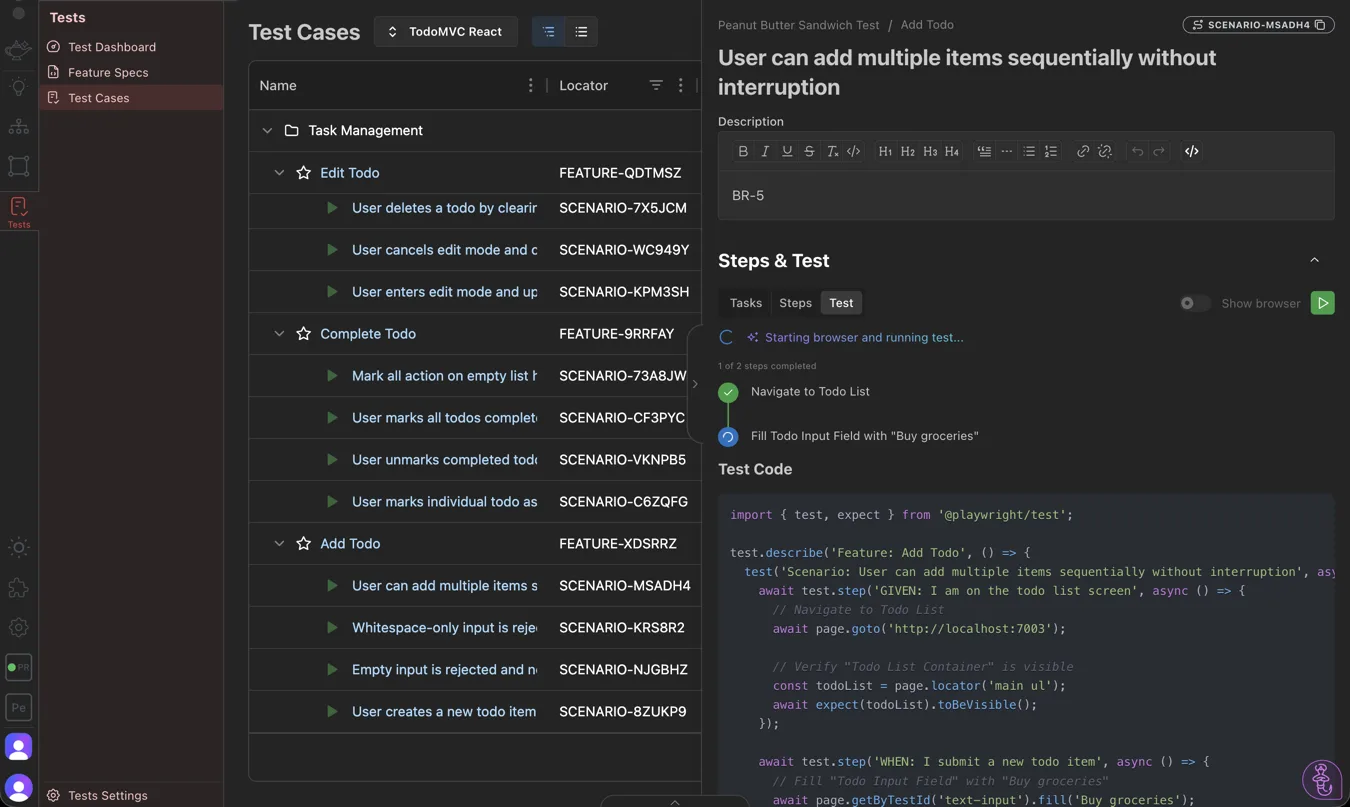
$ claude mcp add appgenie-local ✓ Connected to AppGenie MCP server $ claude "add a search feature" ⟡ Reading product model... ⟡ Found: Feature "Search" → 3 scenarios ⟡ Loading acceptance criteria... Agent: I see the spec requires: → Full-text search across all entities → Filter by type: Feature, Scenario, Step → Results ranked by relevance ✓ Generated 3 test files from spec ✓ All acceptance criteria covered Your agents read the spec before writing code.
Claude Code, Cursor, Codex — any MCP-compatible agent gets structured product context. No prompt engineering.
See All Integrations →
See what agents build. Know if it matches the spec.
Track every agent across every feature. Catch misalignment before it ships. Human-in-the-loop only when it matters — not for every PR.
This isn't LLM observability. It's product-intent governance. Coming Soon
Learn about Agent Management →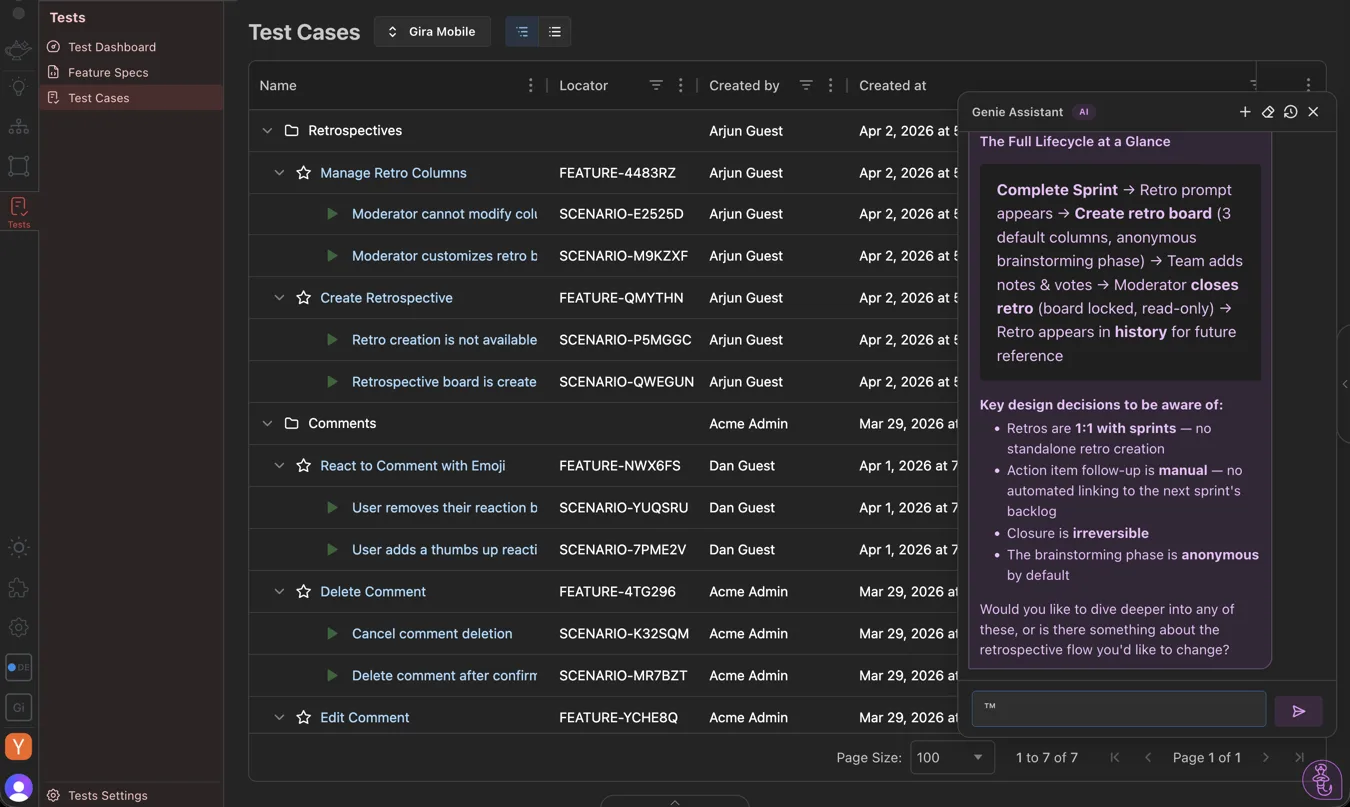
See the full pipeline in action.
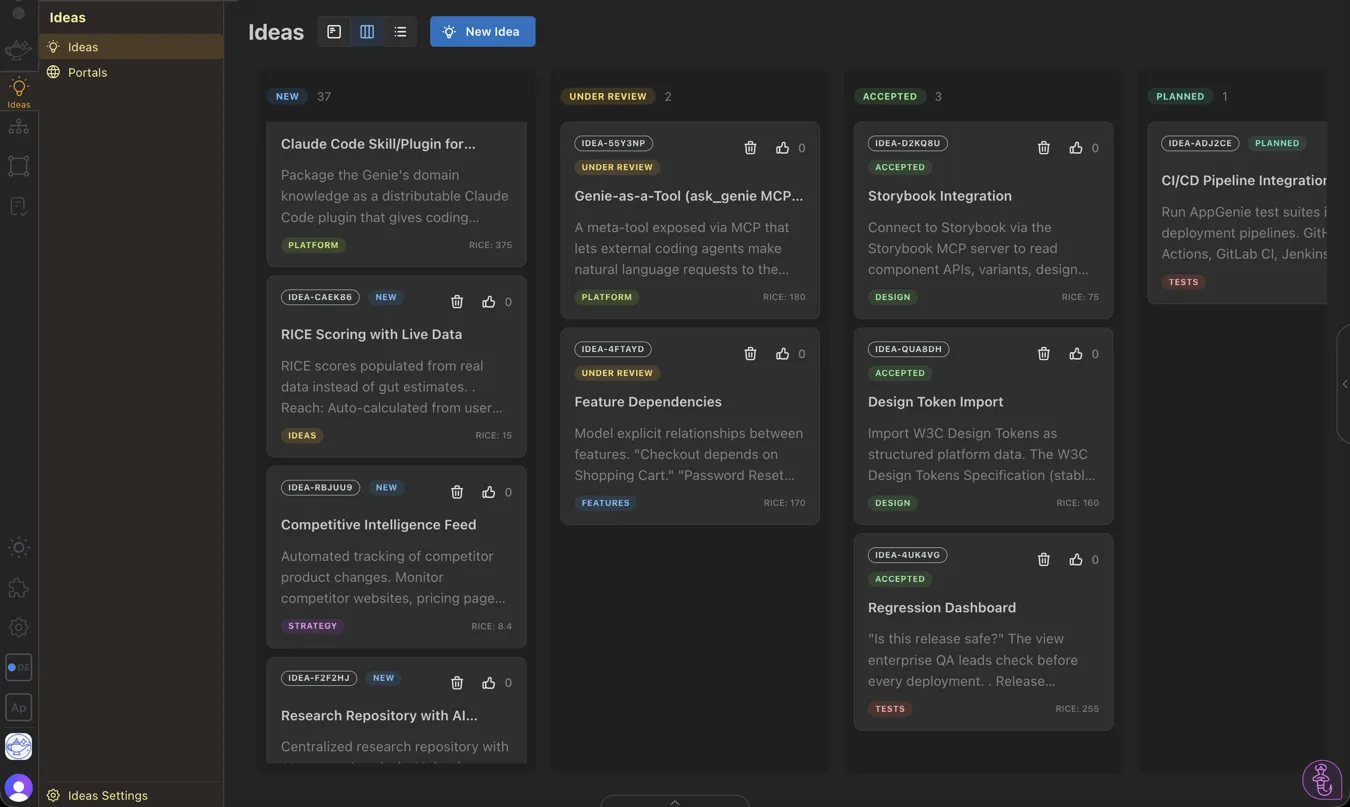 Ideas & Prioritization
 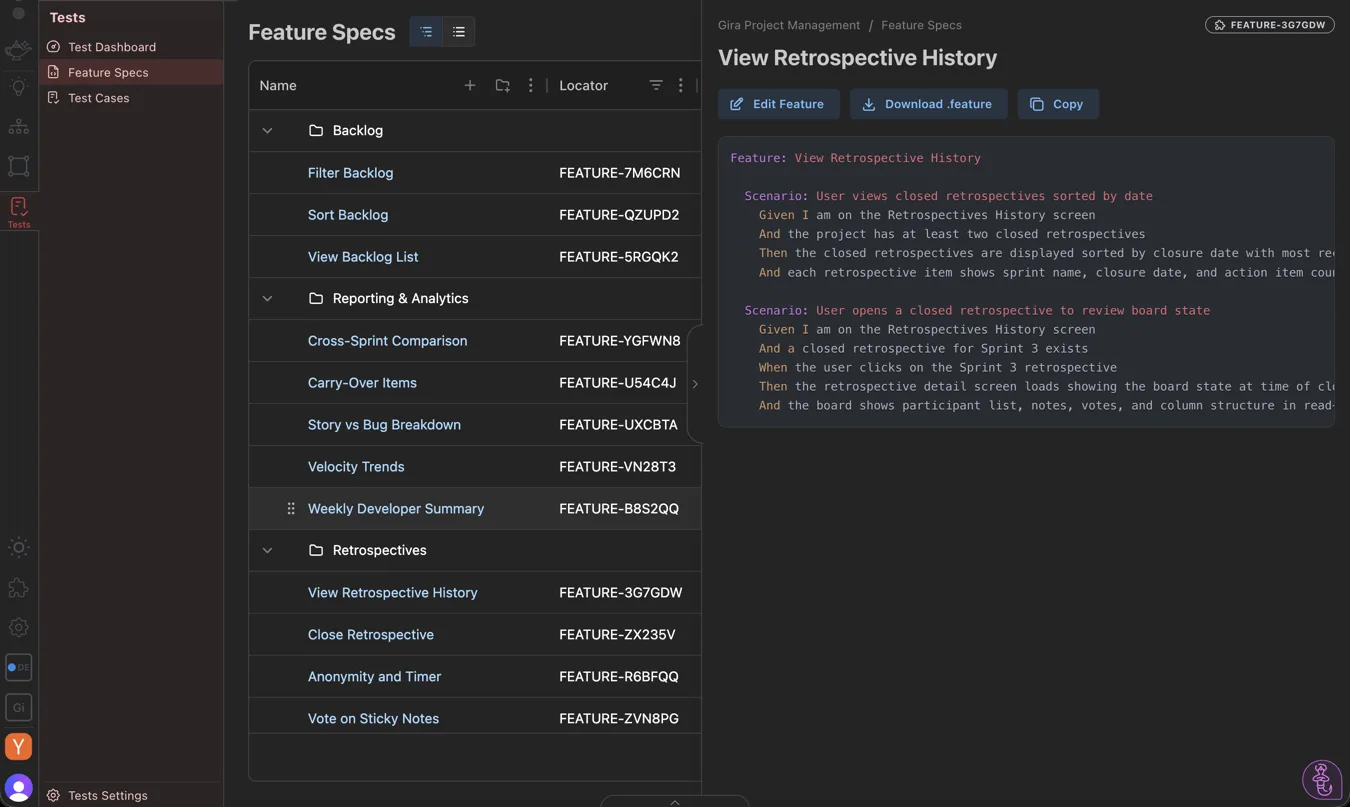 Feature Specifications
 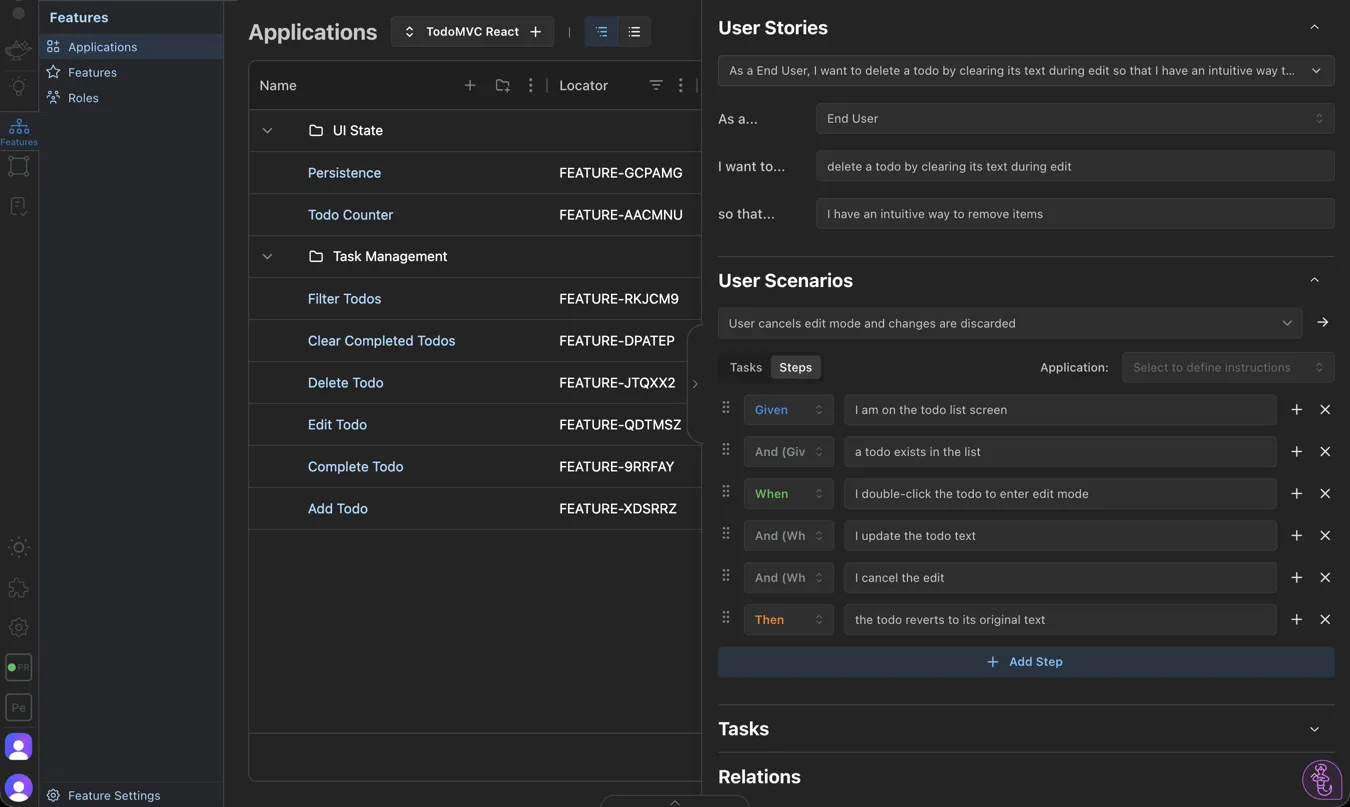 Scenarios & Acceptance Criteria
 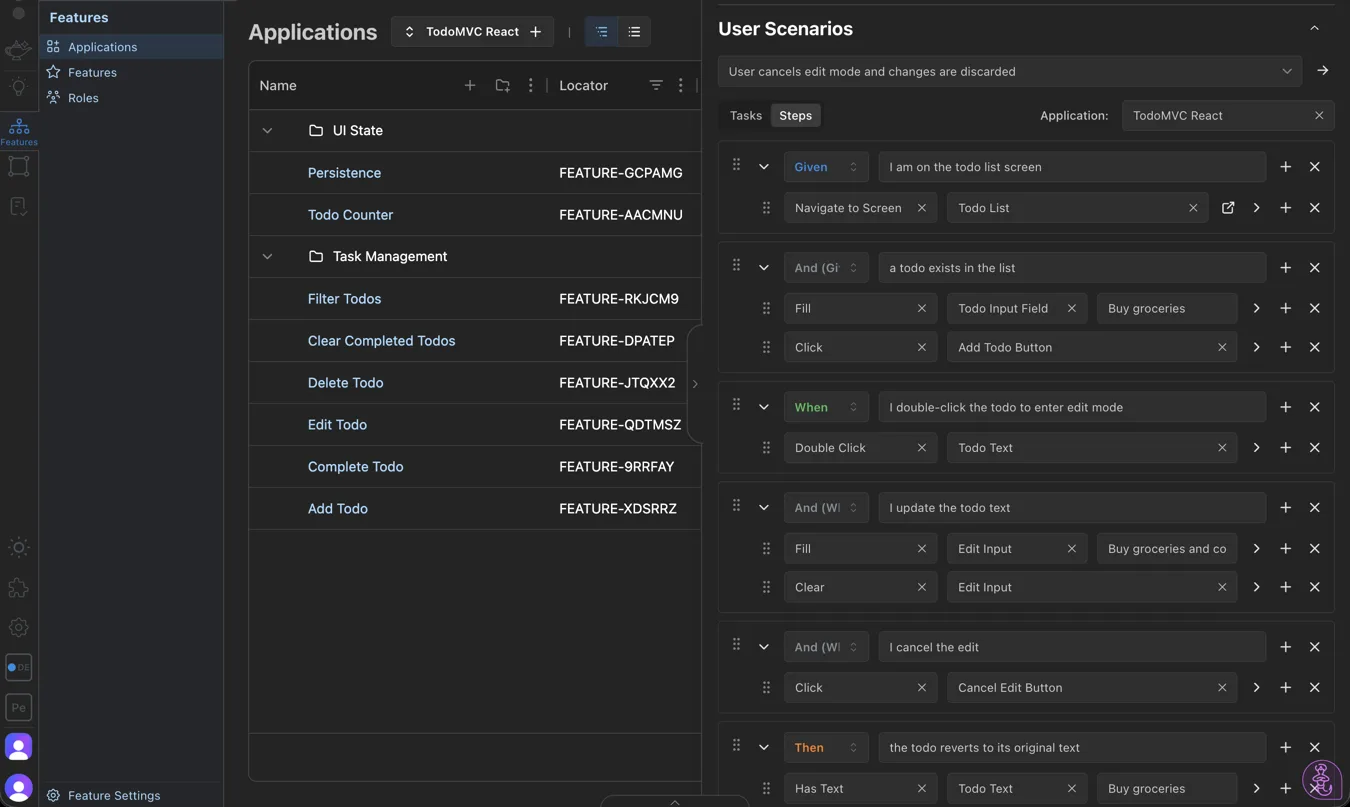 Test Instructions Test Execution AI Genie Assistant
 One Platform. Not Six.
Teams pay for 6+ disconnected tools to go from idea to tested software. AppGenie connects the entire pipeline in one product model.







Where does your team sit
on the SDD spectrum?
Spec-First
Write a spec before generating code. The entry point — better than prompts, but the spec can go stale.
Spec-Anchored
The spec evolves with the software. Tests keep them synchronized. This is where the value lives.
Where AppGenie operatesSpec-as-Source
The spec is the source code. Humans edit specs, never code. The frontier.
Built for the people who
define products.
Product Managers
Build product models that drive the pipeline — not PRDs that go unread.
Engineering Managers
Govern AI agents with product-model-aware oversight at scale.
CTOs
Structured AI governance. Product models as the single source of truth.
Startups
Build faster without the AI-generated tech debt that kills at scale.

AppGenie is the source of truth.
Coding agents are the builders. MCP is the bridge.
Three steps. Zero friction.
Define
Create features and scenarios in natural language. AppGenie structures them.
Connect
Install the MCP integration. Your agents get product context automatically.
Ship
Code aligns with specs. Tests verify intent. Every change is traceable.
Already shipping? Import your existing specs and onboard your codebase →
Frequently Asked Questions
What does SDD stand for?
SDD stands for spec-driven development — a methodology where structured specifications guide both human developers and AI coding agents. All downstream work derives from the spec.
What is the difference between SDD and TDD?
TDD verifies individual functions via unit tests. SDD operates at the product level — defining what the system should do, then generating tests, providing agent context, and validating intent. The two are complementary.
How is AppGenie different from Kiro or Spec Kit?
Kiro is an AI-powered IDE with spec-driven features for engineers. Spec Kit is a specification workflow toolkit. AppGenie is a product development platform — the specification connects product managers, engineers, and AI agents through a shared, testable model.
Do I need to write specifications manually?
Not entirely. Describe features in natural language — AppGenie structures the input into testable specifications. You review and refine.

Ready to make your specs
drive everything?
Join the waitlist and be first in line when AppGenie opens up.