
Standardize How Your Team Builds With AI
When every PM specifies differently, AI agents build inconsistently — because they build exactly what they're given. AppGenie gives your whole team one structured product model: a consistent, testable format every PM uses and every agent reads. Team governance is on the way.
Get Early Access for Teams →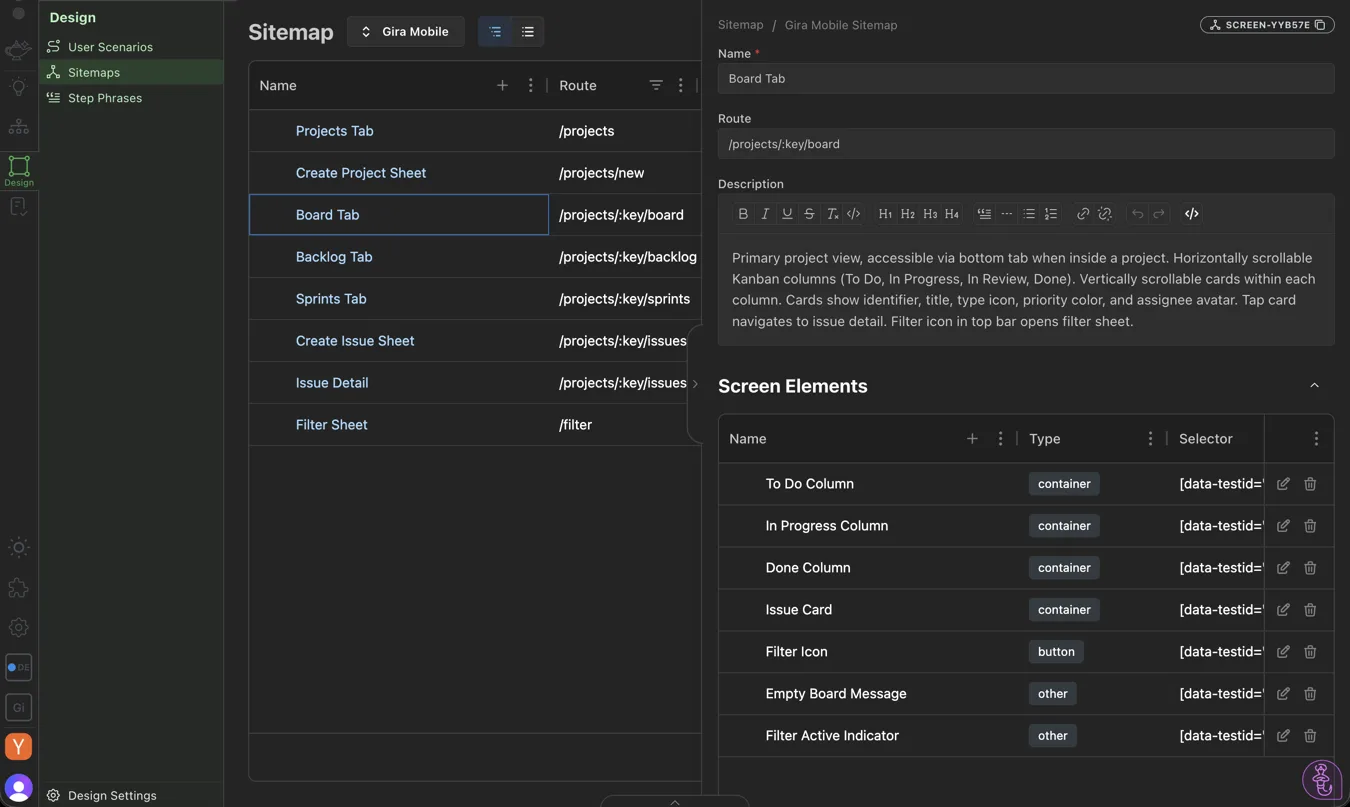

Inconsistent Specs, Inconsistent Product
The difference between a team that uses AI agents and a team that governs them isn't talent — it's whether everyone produces specifications agents can act on the same way.

Every PM Specs Differently
Some write detailed PRDs. Some write a paragraph in Jira. Some rely on Slack threads that scroll into oblivion. When the format varies across your team, so does the rigor — and so does what reaches the people (and agents) building from it.

Agents Don't Compensate
Human developers learn to fill gaps — they ask, they attend planning, they build tribal knowledge. AI coding agents build exactly what they're given. If specification quality varies across PMs, output quality varies across the product. Same agents, different results.

Quality Is a Skill, Not a System
When rigor depends on which PM wrote the spec, quality is an individual trait you hope for — not a property of the system. That doesn't scale as the team grows and AI agent usage climbs across every product area.

Set the standard once and let the platform carry it — not a process document people read once and forget. This isn't a PM tool. It's product development infrastructure.
One Format,
Every PM
When every product manager works in the same structured format — features with scenarios, acceptance criteria, and strategic alignment — specification quality becomes a property of the system, not an individual skill. New PMs ramp faster because the format teaches what a complete spec looks like. Experienced PMs go deeper because the structure surfaces gaps. Everyone produces specs that agents and test generators can act on.
What is a product model? →
See the Shape
of Your Coverage
Because the product model is structured data instead of documents spread across Confluence, Docs, and Jira, you can see what's specified, where scenarios are missing, and which features have generated tests — at the feature and product-area level. Gaps are visible before they become shipped defects. Quantified portfolio metrics — agent-alignment scores, governance activity — are on the roadmap.
Explore product management →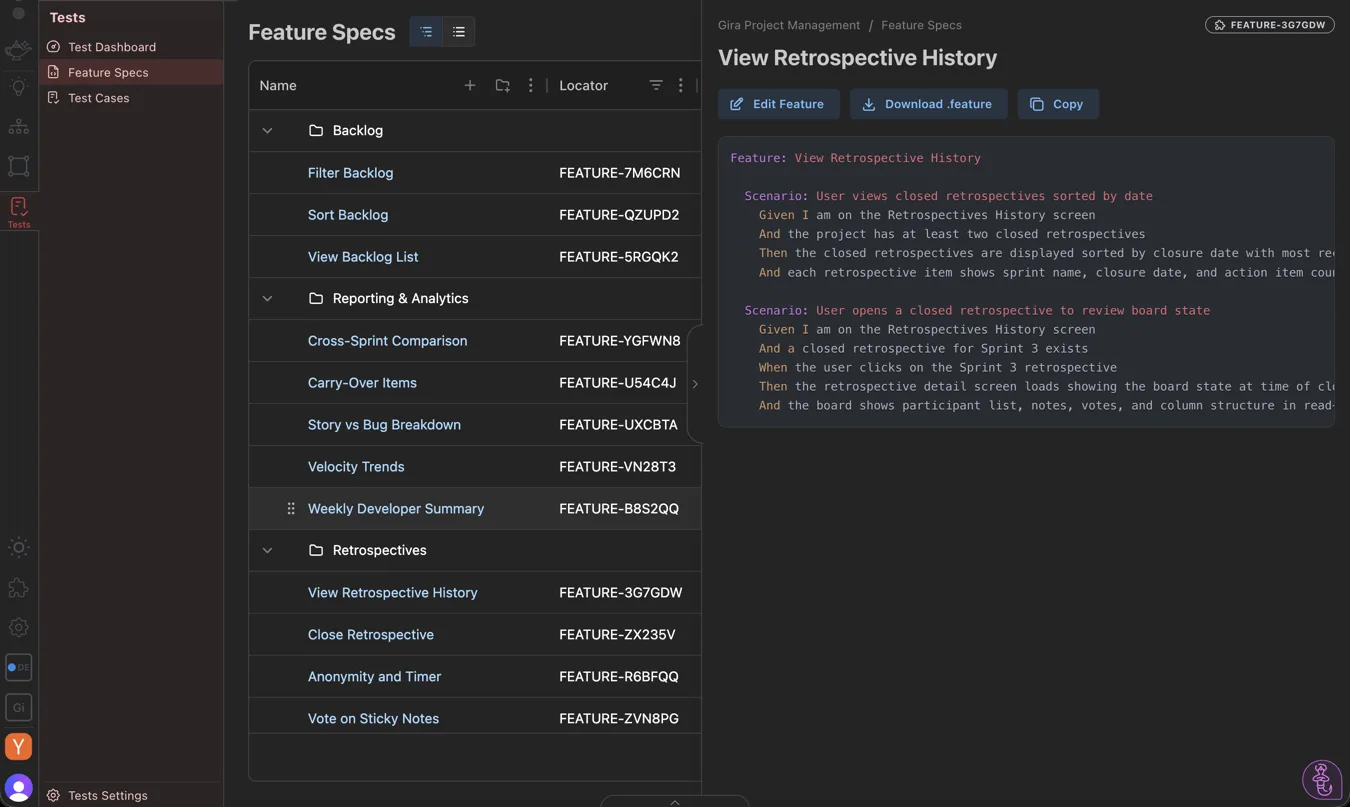

Key Features
One structured format every PM and agent shares, with tests generated across product areas — plus team-wide governance, a quantified metrics dashboard, and tracker sync.
- ✓ One structured spec format every PM uses — rigor by structure
- ✓ Features, scenarios, and acceptance criteria, machine-readable
- ✓ AI agents across the team read one shared product model (MCP)
- ✓ E2E tests generated from specs across product areas
- ✓ Structured visibility into what's specified and tested
- ◇ Team-wide governance policies and review gates Coming Soon
- ◇ Quantified coverage & agent-alignment metrics dashboard Coming Soon
- ◇ Jira / Linear bidirectional sync Coming Soon

How Teams Deploy AppGenie
From one PM proving the value to the whole org standardizing on one product model — the value compounds as each PM's work strengthens the shared model and its test coverage.
Prove the Value
Start with one PM on one product area. Define features, connect agents via MCP, generate tests. Validate that structured specs improve agent output.
Standardize the Format
Roll out to the full team. The structured format becomes the team standard — new PMs onboard into rigor taught by the format itself.
Establish Governance
Coming soon: define review gates, monitoring policies, and quality thresholds at the team level, calibrated to your risk tolerance.
Scale With Confidence
The product model becomes the single source of truth across teams, agents, and product areas — and strategy decisions draw on its coverage.

Frequently Asked Questions
How does AppGenie help product leaders standardize their teams?
AppGenie provides a structured specification format — features with scenarios and acceptance criteria — that every PM uses. The format enforces rigor by structure, not by process documents people read once and forget. Set the standard once in the product model, and the platform carries it across every PM and every AI coding agent.
Can AppGenie scale across multiple product areas?
Yes. The product model supports multiple product areas, each maintaining its own feature set while sharing the same structured format. Shared governance policies and team-wide review rules are on the roadmap.
What visibility does AppGenie give product leaders today?
Because the model is structured data — not documents scattered across Confluence, Docs, and Jira — you can see what's specified, where scenarios are missing, and which features have generated tests, at the feature and product-area level. Quantified portfolio metrics (agent-alignment scores, governance activity) are on the roadmap.
How does AppGenie integrate with existing PM tools?
AppGenie is the specification layer above your trackers. It doesn't replace Jira, Linear, or your roadmap software — it adds the structured product model those tools don't provide. Bidirectional Jira and Linear sync is on the roadmap.
Ready to standardize your team on one product model?
We're onboarding a small group of product orgs before launch. Add your company and we'll be in touch about early access.
Get Early Access for Teams →