
Build Fast Without Building Wrong
Speed without structure creates the technical debt that kills early products — and AI agents accelerate debt as fast as they ship features. AppGenie gives your agents a structured spec to build against and tests that verify the output, without slowing the build-measure-learn loop. Free to start.
Join the Waitlist →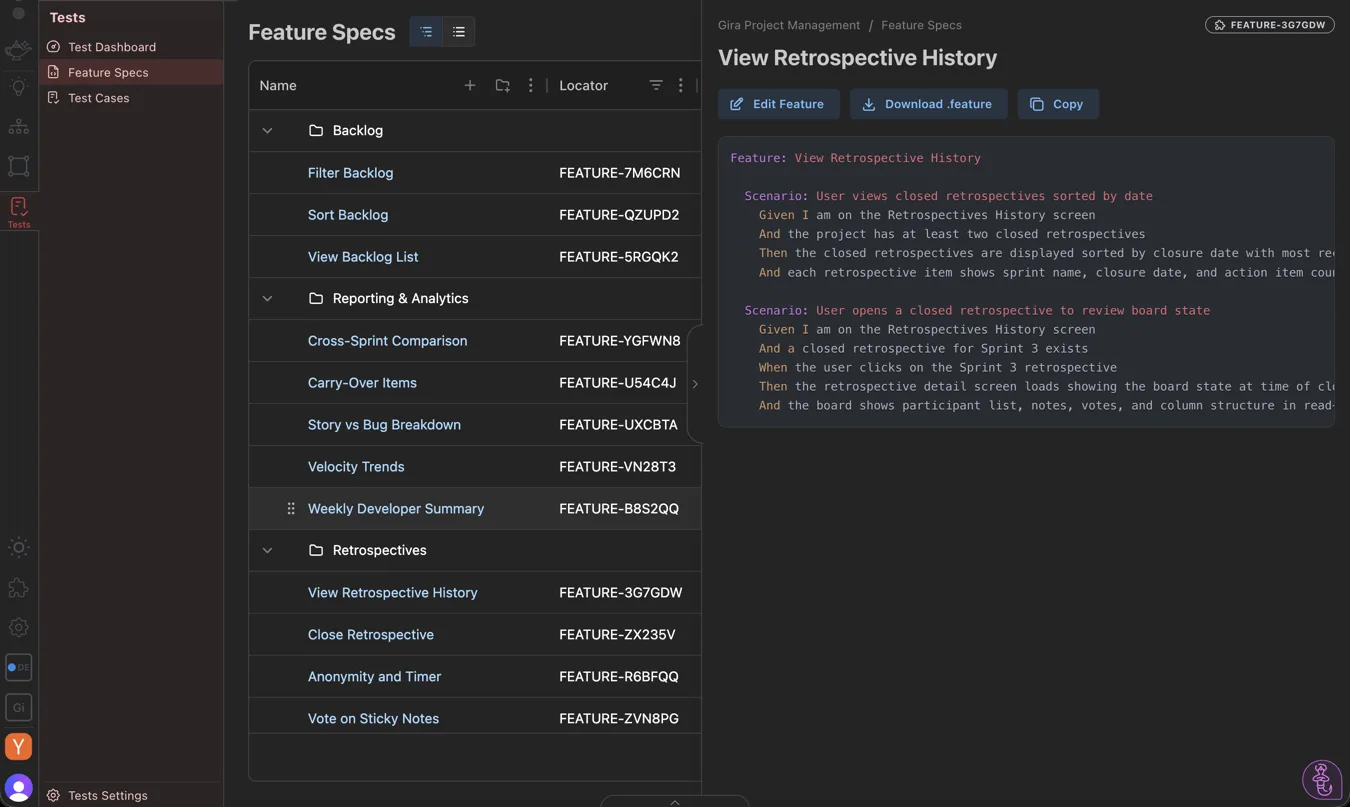

Why Startups Need Structure Before They Think They Do
Not process overhead. Not governance theater. A lightweight product model that bounds what agents build — so velocity doesn't quietly turn into a rebuild.

Agents Accelerate Debt, Too
A coding agent can ship a feature in minutes — and ship one that contradicts your business logic, duplicates what already exists, or hides a vulnerability that surfaces six months later. At pre-seed you can't afford to bet that every generation guessed your intent right.

Misalignment Compounds
A misaligned feature isn't one bug — it's a cascade. Tests get written against the wrong behavior; new features build on the wrong foundation. By the time you find it, fixing it means rebuilding — and you've burned runway on code you have to throw away.

No QA Team to Catch It
One or two developers, several AI agents, no dedicated reviewers. The code-review capacity that would catch specification drift in a bigger org simply isn't there — so drift ships, and the debt accrues quietly.

Structure doesn't mean slow. A product model takes minutes to set up — and agents with structured context produce better first-pass code than agents working from a one-line prompt.
Bound the Agent
to the Spec
When an agent builds against a prompt, every feature is a bet that it guessed your intent. When it builds against a structured product model — features with scenarios and explicit acceptance criteria — the output is constrained to what the product is supposed to do. Edge cases are defined before generation, not discovered in production. That's how you keep moving fast without the debt that comes with it.
What is a product model? →
Tests Without
a QA Team
You don't have a test engineer — you might not have a full-time developer. AppGenie generates E2E tests directly from your feature scenarios, so the product gets verified against your specification automatically, every time the code changes. You already need the spec to guide your agents. The tests come from the same artifact — no extra work, no extra headcount.
Explore AI E2E testing →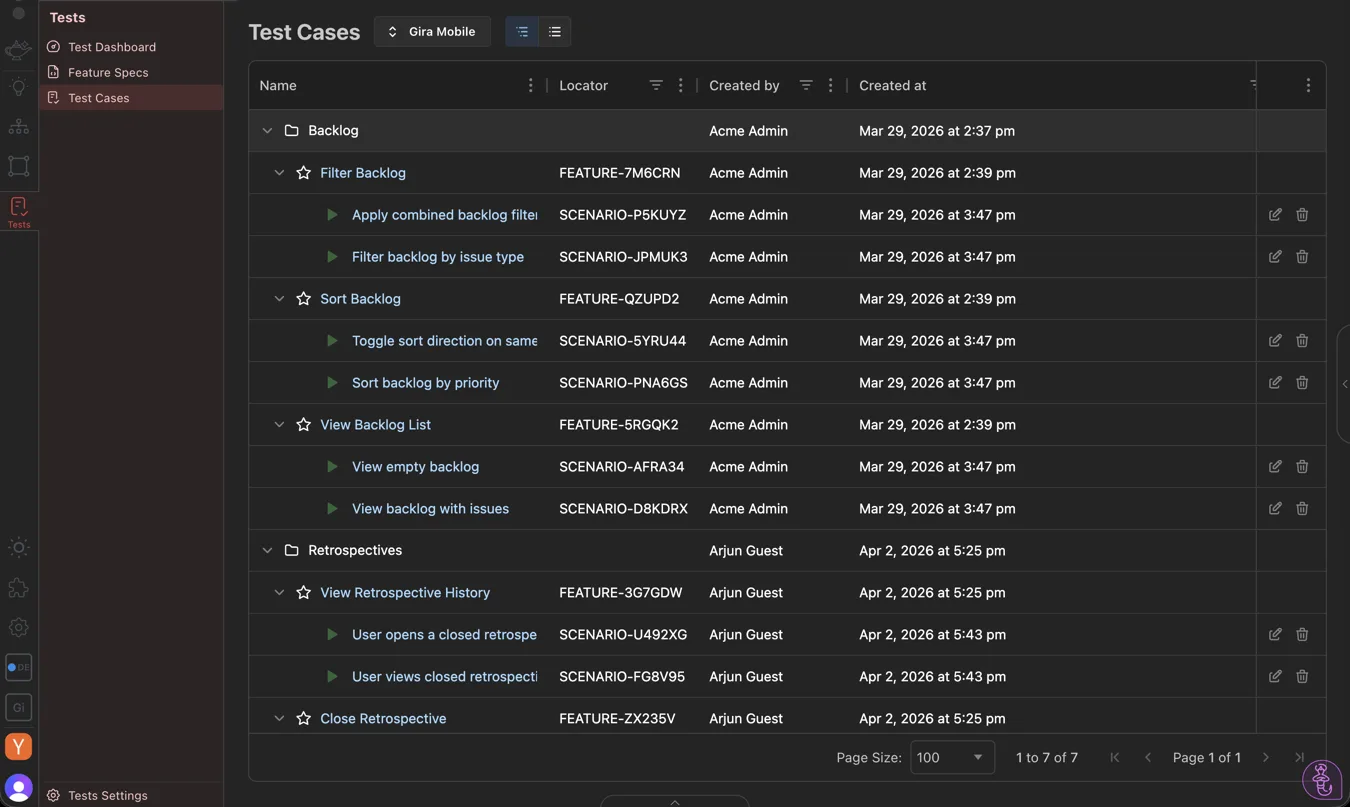

The Free Tier Is the Full Platform
The free DEFINE tier isn't a demo or a 14-day timer — it's the full product model. Team governance is the paid layer, and it's still on the way.
- ✓ Full product model on the free DEFINE tier — no credit card
- ✓ Features, scenarios, and acceptance criteria in plain language
- ✓ MCP integration — agents read and write the model
- ✓ E2E tests generated from your scenarios (no QA team needed)
- ✓ Idea capture with RICE scoring, promote straight to features
- ✓ Scales from 3 features to 300 — it's structured data, not docs
- ◇ Team-wide governance and review gates Coming Soon
- ◇ Specification monitoring across the team Coming Soon

From Day One to Series A
The product model scales because it's structured data, not a pile of documents. The same artifact that guides a solo founder's agents standardizes a growing team.
Pre-Seed: Solo + Agents
You're PM, designer, and tech lead. Define features; agents build against the spec; tests verify. Ship what you meant — no QA hire.
Seed: Small Team
One or two developers work alongside agents. The product model is the shared source of truth — new hires read it and get the product on day one.
Series A: Standardize
The product team grows and consistency matters. The same structured format holds quality steady as headcount climbs.
Scale: Govern
Coming soon: team-wide review gates and specification monitoring keep quality from degrading as the team and agent count grow.

Frequently Asked Questions
What AI tools do startups need most?
Startups need velocity without accumulating technical debt. The highest-leverage tools give AI coding agents structured product context, generate automated tests from specifications, and build a product model that scales with the team. AppGenie combines all three, free for lean teams.
How does AppGenie prevent AI-generated technical debt?
AI-generated debt comes from agents building against unstructured context — prompts, partial specs, verbal agreements. AppGenie replaces that with a structured product model that defines what the product should do, the acceptance criteria, and the tests that verify the output. Agents build against the spec; tests catch deviations in the first build cycle, not the fifth.
Is AppGenie free for startups?
Yes. The DEFINE tier is free — no credit card, no trial timer. It includes the full product model: idea management, features, scenarios, and MCP integration with AI coding agents. Upgrade to paid tiers when you need team governance features. See pricing for the full breakdown.
How is AppGenie different from just using Claude Code or Cursor directly?
Claude Code and Cursor generate code. AppGenie is the specification layer that tells those agents what to build. Without it, agents build against ad-hoc, ephemeral prompts. With it, they build against a persistent, structured product model with defined scenarios and acceptance criteria. Same agents — better context, better output.
Move fast. Keep it right.
Join the waitlist for early access to the full product model.
Join the Waitlist →