
Behavior Driven Development for the AI Era
BDD started with a powerful idea: define behavior in language everyone understands, before any code. Step definitions and brittle glue code buried that promise. AI changes the execution — write the scenario, AppGenie generates the test and feeds the agent.
Join the Waitlist →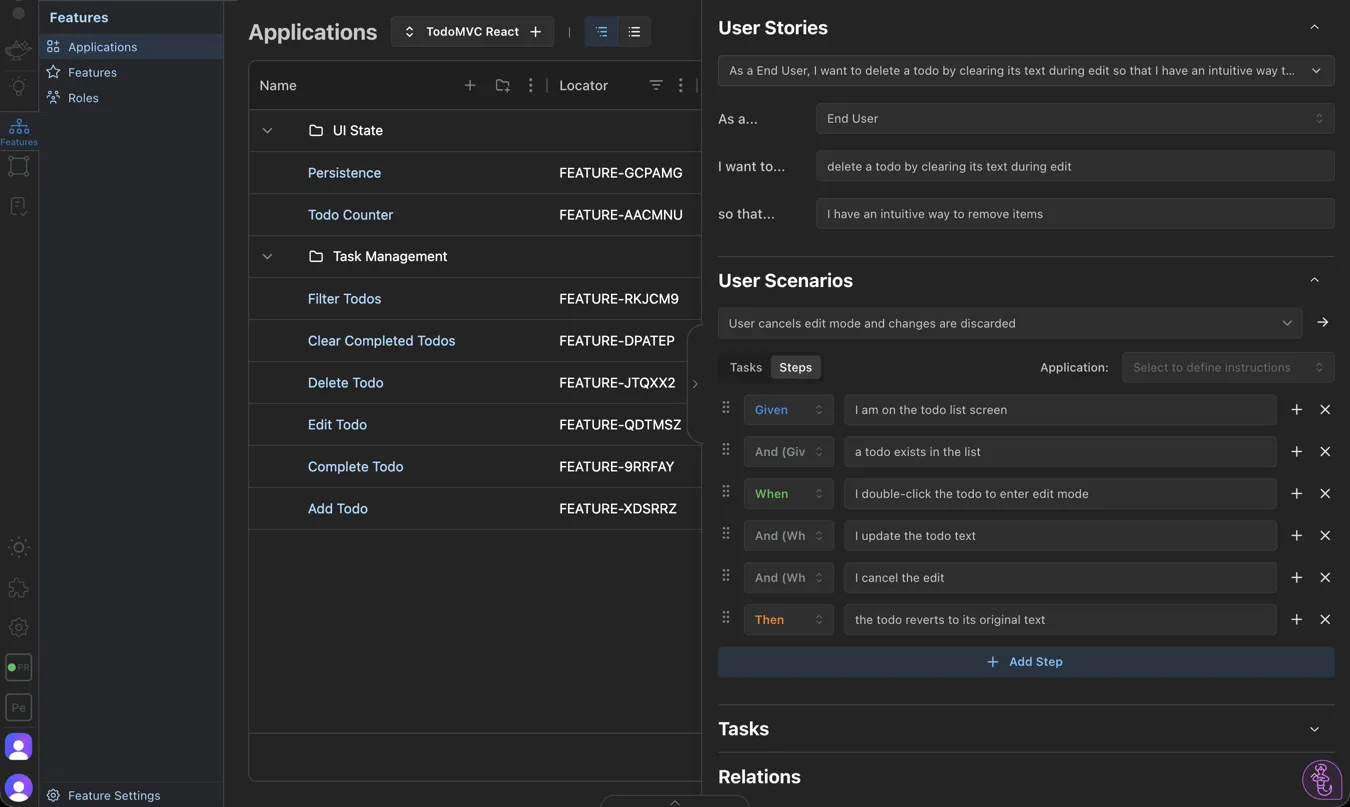

What BDD Got Right — and Still Does
Two decades on, BDD's core ideas haven't aged. They've become prerequisites for working with AI agents. AppGenie keeps all three; it only changes how they execute.

Shared Language
Features described so product, design, and engineering all understand them. No code, no jargon — just behavior: "Given a user is logged in, when they add an item, then the cart total updates." That shared vocabulary matters more now: AI agents need unambiguous context to generate correct code.

Behavior as Specification
The specification is the test. No separate test plan, no parallel test-case document. The Given/When/Then scenario is both the requirement and the validation criteria — so they cannot drift out of sync.

Outside-In Development
Start from the user's perspective and work inward. What should the user experience? What behaviors support it? What code implements those behaviors? AppGenie preserves all three principles — what it changes is the execution.

The tool designed to save communication overhead introduced implementation overhead. Most teams hit the step-definition wall and quietly gave up.

Where Traditional BDD Drifted
Gherkin scenarios ended up written by developers, not product people. Step definitions became brittle glue code. The promise of business-readable tests became the reality of developer-maintained test infrastructure.

Step Definitions Became the Bottleneck
In Cucumber-style frameworks, every scenario needs step definitions — code mapping natural-language steps to test logic. That's a developer task. PMs write scenarios, then wait. The shared language existed; the shared ownership didn't.

Glue Code Is Fragile
Step definitions couple to the UI, API, or database. When the implementation changes, they break — even if the behavior didn't. A product with 200 scenarios might carry 600+ step definitions, each a breakpoint during a refactor.

So Adoption Stalled
The overhead meant only the most disciplined teams sustained BDD. Most tried it, hit the step-definition wall, and either abandoned it or shrank it to a handful of smoke tests. The promise outran the practicality.
Write the Spec,
Generate Everything Else
AppGenie implements BDD at the product-model level, not the code level. Scenarios are structured data attached to features — not .feature files in a test directory — built from reusable step phrases. From them, AppGenie generates the executable Playwright test directly: no per-scenario step-definition glue code to hand-maintain. When the implementation changes and a test breaks, the AI healing loop regenerates it from the unchanged scenario.
How test generation works →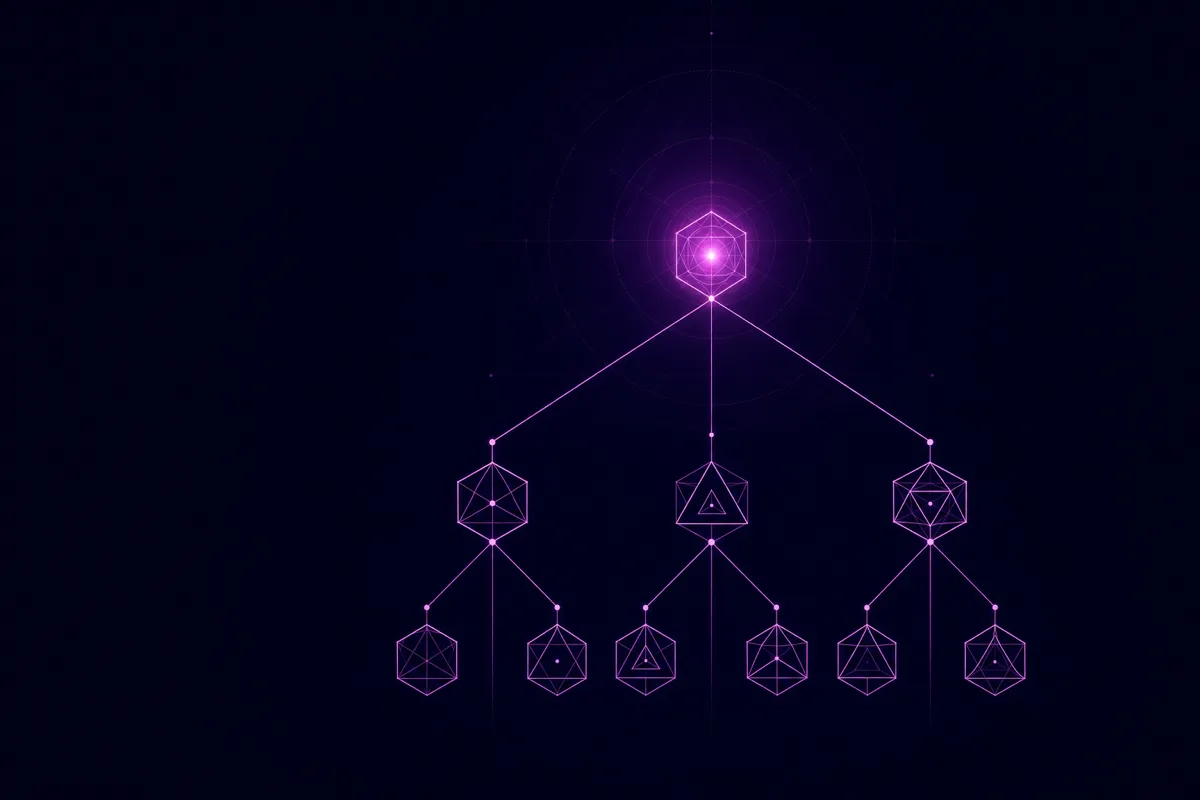
Scenarios Live in the Product Model,
Not in Test Files
Because scenarios are first-class citizens of the product specification — visible to product managers, engineers, and AI agents — the people who understand the behavior are the ones who define it. A PM updates a scenario and the change propagates to every downstream consumer: test generation, agent context, acceptance criteria. The shared-ownership promise of BDD is restored because the developer handoff disappears.
What is a product model? →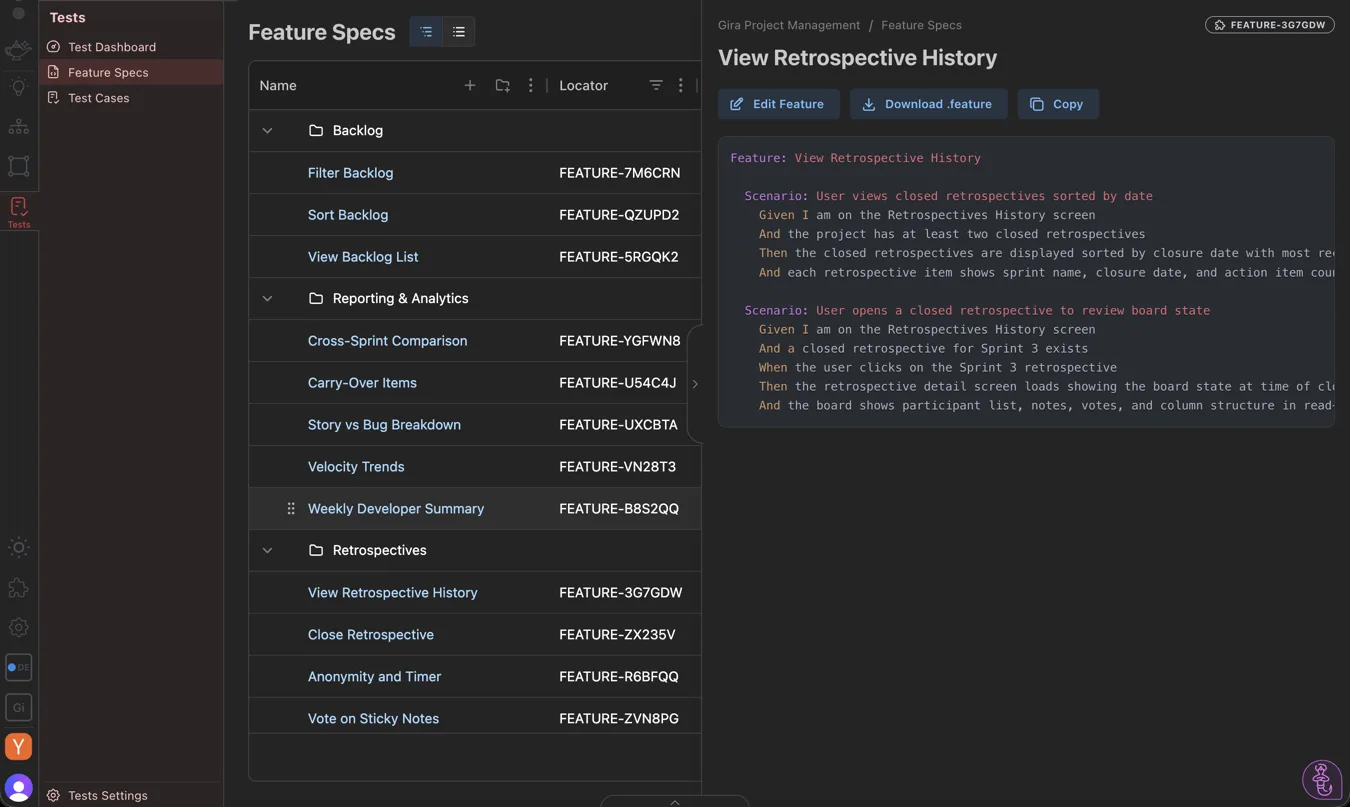

Key Features
Scenarios in the product model, reusable step phrases, generated tests, a healing loop, and MCP read/write — with intent-boundary governance on agent output.
- ✓ Given/When/Then scenarios as structured data in the model
- ✓ Reusable step phrases (no per-scenario glue code to maintain)
- ✓ Executable Playwright tests generated from scenarios
- ✓ AI healing when implementation changes
- ✓ PM-editable scenarios — no developer handoff
- ✓ MCP integration — agents read scenarios before coding
- ◇ Intent-boundary governance on agent output Coming Soon
- ◇ Roadmaps and sprint planning Coming Soon

BDD Frameworks, Compared
Cucumber, SpecFlow, and Behave gave BDD its format. They also gave it the step-definition tax. AppGenie keeps the format and drops the tax.
| Capability | Cucumber | SpecFlow | Behave | AppGenie |
|---|---|---|---|---|
| Given/When/Then scenarios | Yes | Yes | Yes | Yes |
| Step definitions required | Yes | Yes | Yes | No — tests generated |
| PM can write scenarios | In theory | In theory | In theory | Yes — in the model |
| Scenarios drive AI agents | No | No | No | Yes — via MCP |
| Where scenarios live | Test files | Test files | Test files | First-class features |
| On a UI change | Manual rewrite | Manual rewrite | Manual rewrite | AI-assisted regeneration |

Frequently Asked Questions
What is behavior driven development?
Behavior driven development (BDD) is a methodology where product behavior is defined in structured, human-readable scenarios before implementation. Scenarios follow the Given-When-Then format: given a precondition, when an action occurs, then an expected outcome is verified. Dan North introduced BDD in 2006 as an evolution of test-driven development, shifting focus from code correctness to product behavior. It bridges product requirements and automated testing.
What is the difference between BDD and TDD?
TDD writes unit tests before implementation, focusing on individual function correctness. BDD operates higher up — defining product behaviors as scenarios that verify user-visible outcomes. TDD tests code; BDD tests behavior. They are complementary, and AppGenie leans on both: scenarios define what to test, and generated E2E tests verify it.
What is a BDD framework?
A BDD framework interprets Given-When-Then scenarios and executes them as automated tests. Traditional frameworks — Cucumber, SpecFlow, Behave — require developers to write step definitions mapping each step to executable logic. AppGenie generates the executable test directly from structured scenarios and reusable step phrases in the product model, so there's no hand-maintained glue-code layer.
How does AppGenie handle scenario changes?
When a scenario changes, AppGenie regenerates the test from the revised spec — no step definition to update, no glue code to refactor. The change flows through the product model to test generation, agent context, and acceptance criteria. Scenarios evolve with the product instead of rotting into stale artifacts no one maintains.
Is BDD still relevant in 2026?
BDD's principles — shared language, behavior as specification, outside-in development — are more relevant than ever, because AI agents need unambiguous, structured context. What changed is the execution: AI can now turn natural-language scenarios into executable tests without manual step definitions, which is exactly the overhead that stalled traditional adoption. This is spec-driven development giving BDD the execution model it always needed.